Date Posted: 1st April 2026
FutureNEST HMS Duncan Visit
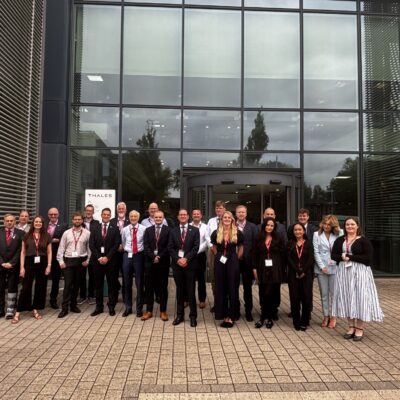
Early March, UKFutureNEST were fortunate enough to be welcomed aboard HMS DUNCAN, a Daring Class Type 45 Destroyer.
FutureNEST were hosted by Officers from the Weapons Engineering and Marine Engineering Departments. They had a comprehensive tour of the platform, exploring both the WE and the ME compartments. The visit also provided opportunity to talk to sailors and better understand life onboard.
HMS DUNCAN is the newest Type 45 Destroyer. She specialises in Anti-Air Warfare providing area air defence to Task Groups such as a Carrier Strike Group. This is achieved using her Sea Viper missile system comprising of a Multi-Function Radar, Combat Management System and Aster missiles. She is also fitted with a range of other sophisticated weapons, sensors and communications equipment. Her power and propulsion comes from 2 x Gas Turbines and 2 x Diesel Generators (Pre-PIP) generating high voltage electricity to power two propeller shafts. The marine engineering systems also include everything required for living onboard such as damage control and firefighting, heating, ventilation and air-conditioning, fresh water production, sewage treatment and lighting. The flight deck and hangar allows her to embark a Wildcat or Merlin helicopter depending on the mission. All of these systems are brought together and used to fight the Ship by the Ship’s Company who are split across 6 departments – Warfare, Logistics, Weapon Engineering, Marine Engineering, Executive, and Flight.
The Ship is so much more than just the engineering systems alone. The chance to step onboard and gain an understanding of how the complex system of equipment and personnel operate was of great benefit to those designing and supporting the current and next-generation Royal Navy.
A huge thank you to ex-UKNEST Scholar SLt Henry Beardsall Royal Navy for facilitating the visit. FutureNEST are extremely grateful for the opportunity provided to develop its Early Career Professionals.
Hear it from the FutureNESTers themselves below:
It was a valuable opportunity to see the systems we have been working with, as well as those we may work with in the future. It was also beneficial to learn about how the ship operates and most importantly gain the crew’s insight on both the systems and the Navy as a whole. – Haydn Wollen, BMT
The visit to the Type 45 was an incredible experience. It was fascinating to explore the combat systems and gain insight into how the warship was specifically designed and constructed to fulfil its air defence mission. The highlight for me was engaging with the ship’s crew to learn about life on board and identify areas where improvements could be made. This experience will undoubtedly inform my future roles, enhancing my understanding of how warships are utilised and, crucially, how they must remain adaptable to address emerging challenges and threats. – Lachlann Peacock, SDA
The Type 45 visit was incredibly useful for my development as an engineer working in Maritime Safety without a Naval Background. Getting insight into the surface ship world and being able to see systems and equipment that is discussed with clients in meetings has been so helpful. Having talks from an AWEO and AMEO about their respective roles and life onboard as well as the main uses for the T45 programme. This trip also gave useful insight by allowing us to chat to operators about problems they face, and it gives a reminder of the importance of the work our companies do and the impact on end users. – Flo Leach, Frazer-Nash
It was my first time on a navy vessel, let alone a destroyer. It was no doubt an amazing experience.. While I have seen the motors and switchboards in production and tests , I never imagined how they are installed in a small space on a ship and put to use. It brings a sense of pride to see the end product of the small contribution we do and inspire us to work for better solutions that the Royal Navy can put to use. – Aakriti Gupta, GE
It was fascinating to learn about all of the individual systems on the ship, not only the weapons and engines but also the vast systems which allow for ~200 people to live on the ship for weeks or months at a time. The best part was just seeing every aspect of the ship with knowledgeable and informative tour guides. Understanding all of the roles each member of the ship has and how they all come together to make a T45 such a capable ship was eye-opening, and gave me a new perspective to bring back to work, knowing that even though I design a small part of a sip ecosystem, there will be people who are dedicated to operating and maintaining that relatively small sub-system. -Lewis Fairs, Chess Dynamics
Visiting the Type 45 destroyer HMS Duncan on Wednesday was an incredible experience. We were shown around by the officers who guided us through key areas of the ship including the war room and the engine room while answering all of our questions about the vessel and life in the Royal Navy. It was a brilliant opportunity to network, learn about the inner workings of such an impressive ship and gain a deeper appreciation for the people who operate it. The sheer amount of information the crew monitor in real time and how smoothly everything runs behind the scenes were all eye opening. I also didn’t expect the atmosphere to feel so calm and professional despite the complexity of what the systems can do. Meeting the officers and seeing how knowledgeable and open they were really highlighted the human side of running such a powerful vessel. – Kimberley Isaac, BMT
Related News Posts...